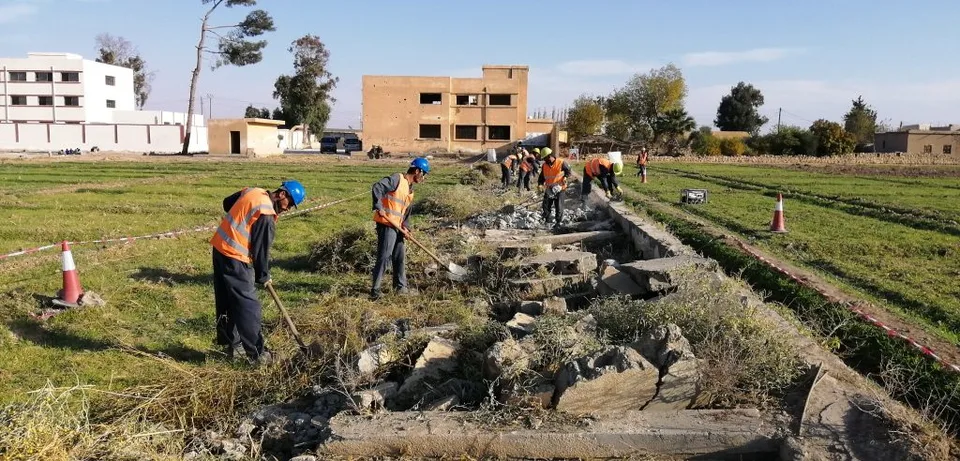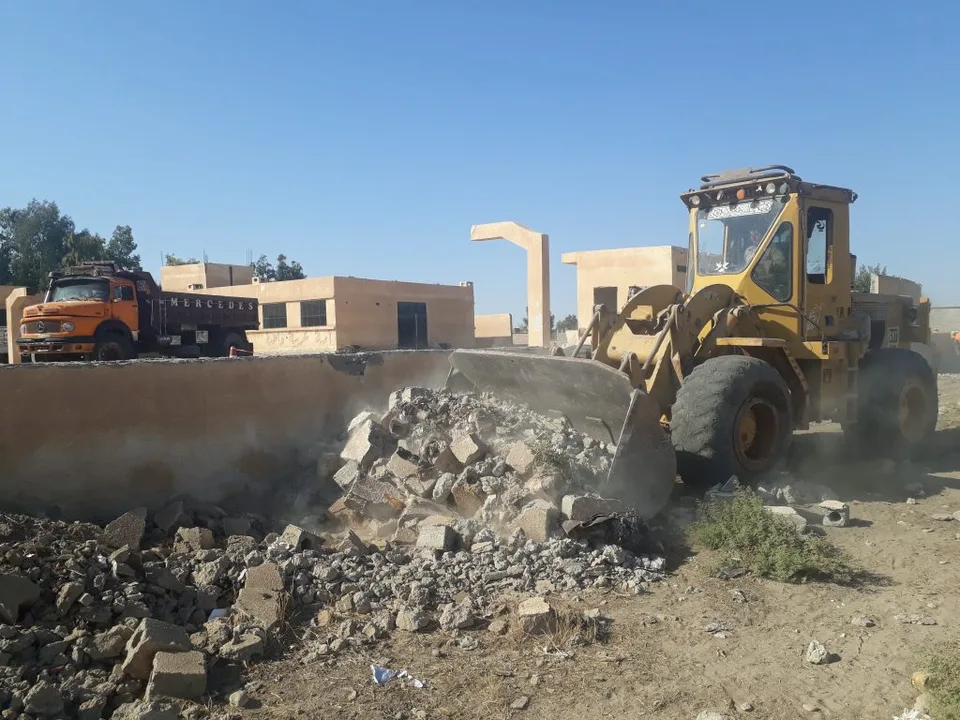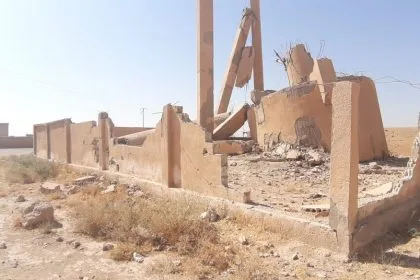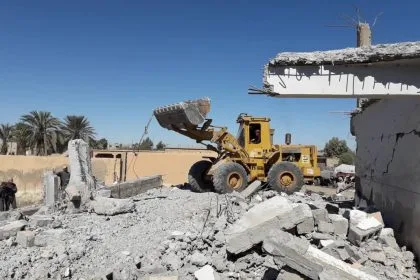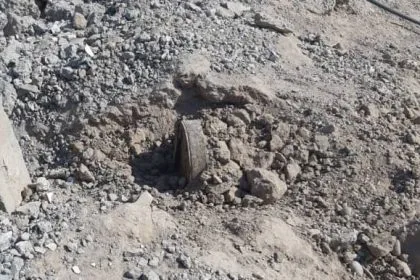
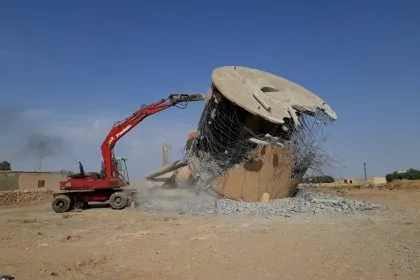
Large quantities of war debris are among the most serious problems affecting Deir ez-Zor.
The danger becomes particularly severe when debris is located close to places where children spend their time, especially schools.
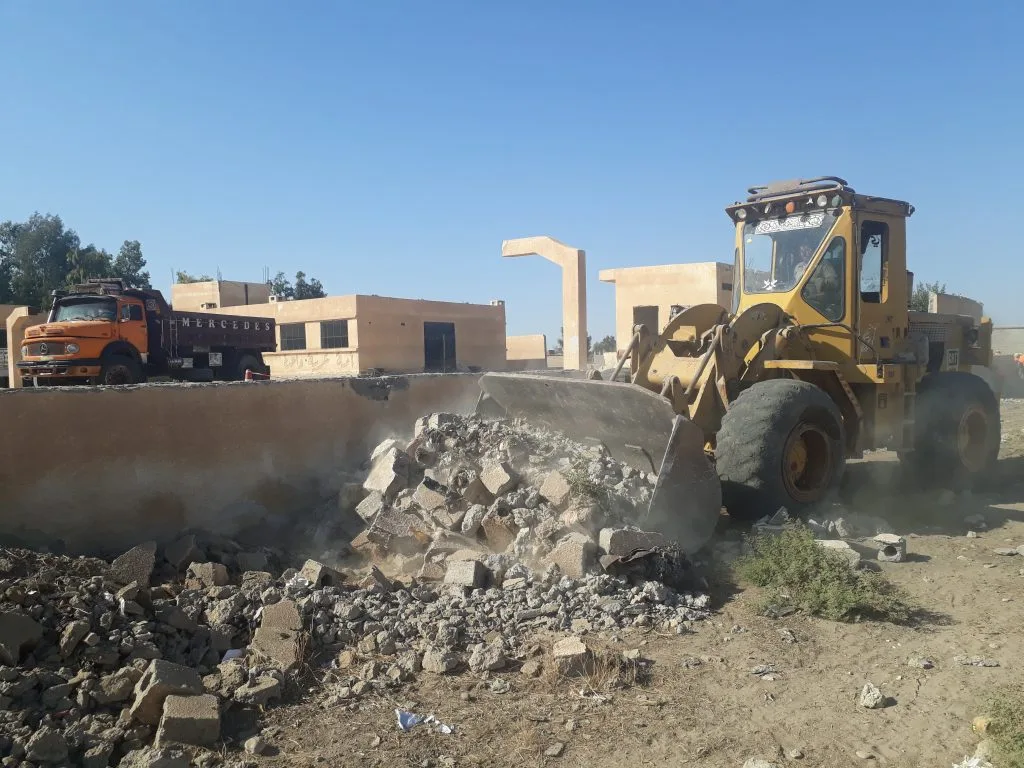
For this reason, the war debris and solid waste removal project was launched, focusing primarily on schools that children continued to attend despite the destruction.
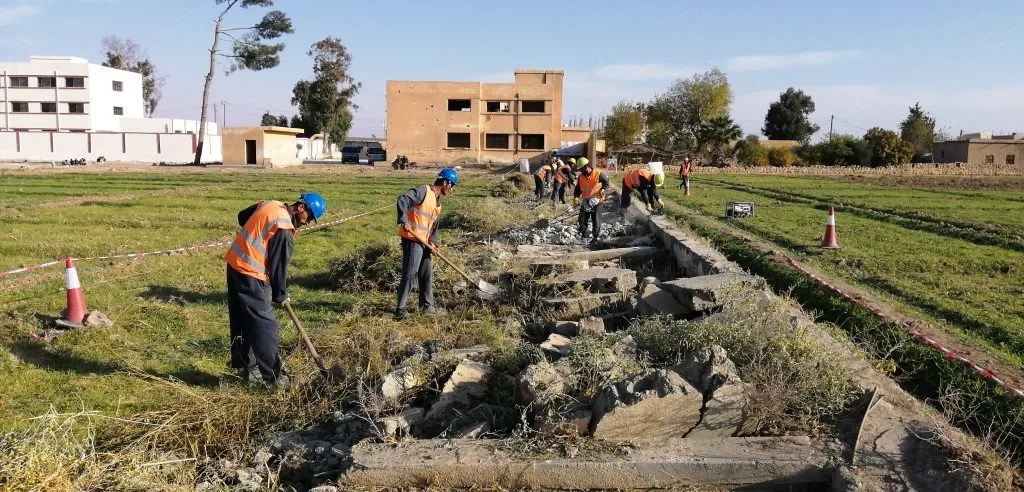
During the project, rubble and damaged structures were removed from 32 school sites, particularly around their surrounding walls, and from five additional public facilities.
A total of 4,745 cubic metres of rubble was cleared.
Much of this material was reused within the project area.
It was used to fill dangerous pits, repair unpaved roads, prepare building foundations, and stabilise agricultural land.
In total, 43 pits that had posed a danger to local residents were filled.
The quantity of rubble reused amounted to 3,990 cubic metres.
The material was also used in foundation work for seven buildings.
In addition, three road sections were levelled. Each was five metres wide, with lengths of 50, 110, and 100 metres respectively.
Dahham al-Abd, headteacher of al-Juneina al-Rifiya School, one of the schools that benefited from the project, describes the situation:
"At the beginning of the school year, we resumed classes. However, explosive remnants were still lying among the rubble on the school grounds.
We were constantly afraid that an explosion might occur at the school.
Essentially, we had only two choices: either close the school or continue teaching despite our fear.
We wanted to keep the school open because there was no other school in the surrounding area for the children to attend.
When the project began, the relevant security authorities were informed. They took care of removing the explosive materials and their remnants.
Today, our school grounds are free from explosives and rubble."
Alongside the clearance operations, the project included an assessment of war damage in affected communities in the eastern countryside of Deir ez-Zor.
The assessment began on 29 September 2019.
The original plan was to survey 35 towns and villages.
Four additional locations were later included: al-Kashma, al-Shaafa, al-Susa, and al-Baghuz.
Increasing numbers of residents were returning to these communities, where large quantities of war debris and waste remained.
It was therefore necessary to establish a reliable database documenting the quantities of debris and waste present.
By the end of the assessment, 39 towns and villages had been surveyed.